
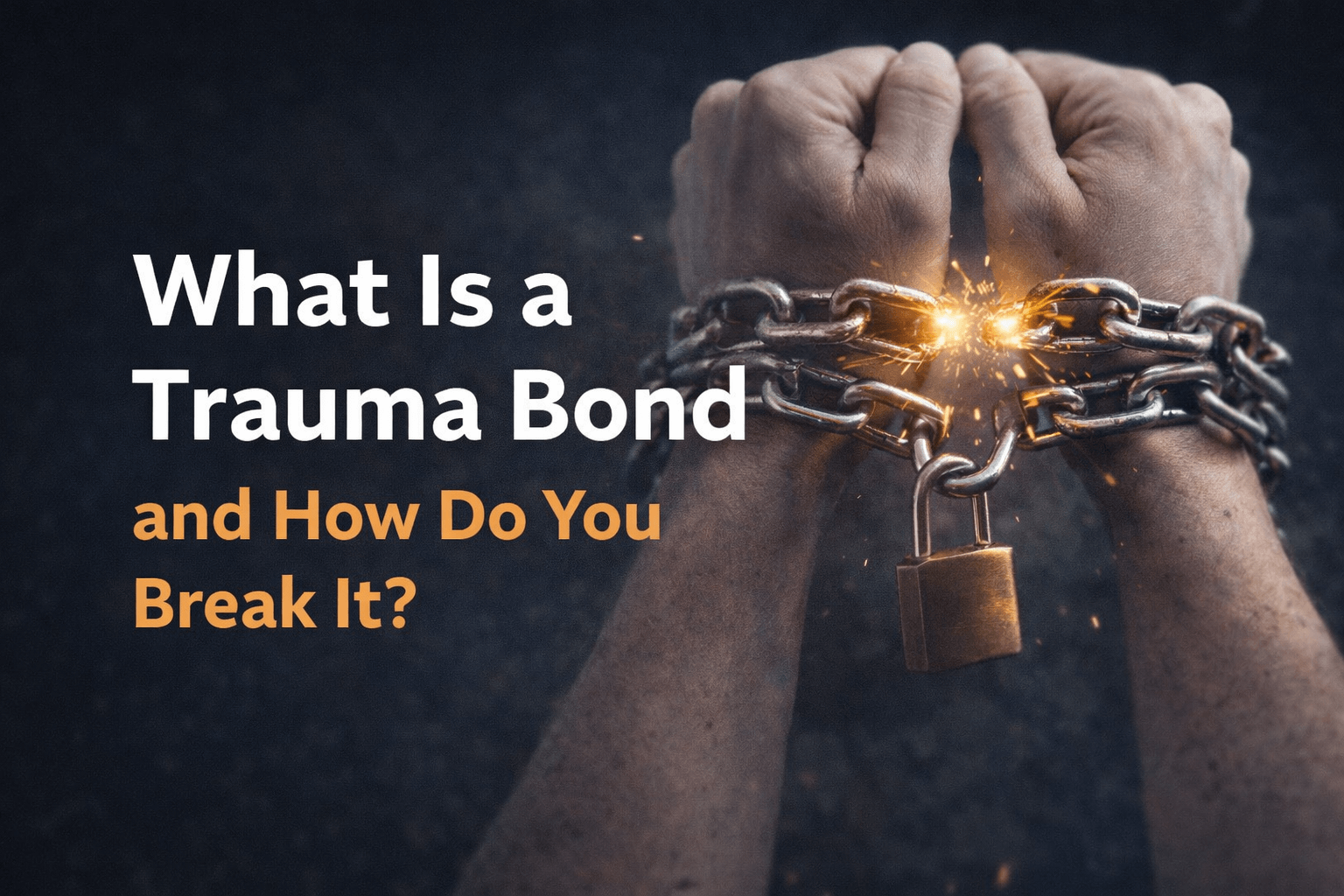
A trauma bond can make it incredibly hard to leave a painful relationship, even when you know deep down that the relationship is harming you. Many people feel confused by this because they think, “If this person hurts me, why do I still feel attached?”
The answer often has less to do with love and more to do with emotional conditioning, manipulation, and repeated cycles of pain followed by relief. That is what makes trauma bonds so powerful and so difficult to break.
In this guide, you will learn what a trauma bond is, the common signs, why it forms, and how to break a trauma bond step by step.
What Is a Trauma Bond?
A trauma bond is a strong emotional attachment that develops through repeated cycles of mistreatment, emotional pain, and intermittent reward. In simple terms, a person hurts you, confuses you, then gives you relief, affection, attention, or hope.
That cycle can create a powerful psychological attachment. Over time, you may begin to crave the moments of relief even more, which makes it harder to step away from the relationship.
A trauma bond often forms in relationships where there is manipulation, gaslighting, control, love bombing, guilt, fear, or repeated emotional instability.
If you have already read our guide on what is gaslighting, signs, examples, and how to respond, you may notice that trauma bonds often grow stronger when confusion and emotional manipulation are repeated over time.
How a Trauma Bond Forms
A trauma bond usually does not happen all at once. It builds through a repeating cycle.
Intense Attachment at the Beginning
Many unhealthy relationships begin with strong emotional intensity. You may feel deeply seen, wanted, chosen, or emotionally swept away.
This early stage can create a strong emotional hook.
Emotional Highs and Lows
After the intense connection, the relationship becomes unstable. There may be criticism, confusion, withdrawal, control, blame, or emotional punishment.
Then suddenly, things improve again. The affection returns. The person apologizes. You feel hopeful again.
That repeated shift between pain and relief strengthens the bond.
Intermittent Reinforcement
One of the strongest parts of trauma bonding is unpredictability. You never know when the person will be loving, distant, cold, or kind.
That unpredictability can increase emotional dependency because you keep waiting for the “good version” of the relationship to return.
Signs of a Trauma Bond
It can be hard to recognize a trauma bond while you are inside it. Here are some common signs.
You Feel Addicted to the Relationship
Even when the relationship is painful, you feel strongly pulled back to it.
You Keep Hoping the Person Will Change
You focus more on their potential than on their repeated behavior.
You Defend the Person to Others
You may minimize what happened or explain away harmful behavior.
You Feel Responsible for Fixing Everything
You blame yourself for the chaos and believe that if you just do better, things will improve.
You Struggle to Leave Even When You Know It Is Unhealthy
Part of you wants peace, but another part keeps pulling you back.
You Crave Relief After Emotional Pain
The relationship hurts you, but when the person becomes kind again, the relief feels intense and powerful.
If these patterns feel familiar, you may be dealing with a trauma bond rather than a healthy emotional connection.
Trauma Bond vs Love
Many people confuse trauma bonding with love because the emotional attachment feels intense.
But healthy love does not depend on repeated fear, instability, guilt, and emotional confusion.
Healthy Love Feels Safe
Healthy love allows honesty, respect, emotional stability, and clear communication.
Trauma Bonding Feels Unstable
A trauma bond often leaves you anxious, exhausted, confused, and emotionally dependent on brief moments of relief.
Intensity is not always love. Sometimes it is attachment built through emotional pain.
Why Trauma Bonds Are So Hard to Break
Trauma bonds are difficult to break because the relationship affects both your emotions and your nervous system.
When pain is repeatedly followed by comfort, your mind begins to associate the person with both distress and relief. This creates a strong cycle that can feel similar to withdrawal when you try to leave.
You may miss the person, doubt your decision, remember only the good moments, or feel panic at the thought of disconnecting.
If you are also trying to recover from narcissistic abuse step by step, understanding trauma bonds can help explain why healing may feel emotionally difficult even after you know the relationship was harmful.
That does not mean the relationship is healthy. It often means the bond has been reinforced through repeated emotional conditioning.
A Practical Recovery Resource
If you are dealing with trauma bonds, gaslighting, emotional manipulation, or narcissistic abuse, it helps to have practical guidance in one place.
The Narcissist Survival Bundle is designed to help you understand unhealthy patterns, protect your peace, and rebuild confidence with step-by-step support.
Explore it here:
https://jistak.com/product/narcissist-survival-bundle/
How to Break a Trauma Bond
Breaking a trauma bond is not only about leaving physically. It is also about breaking the emotional cycle that keeps pulling you back.
Step 1: Name the Pattern Clearly
One of the first steps in healing is recognizing that this may be a trauma bond, not a healthy relationship.
Naming the pattern helps reduce self-blame. It gives you language for what you have been experiencing.
Ask Yourself Honest Questions
- Am I attached to this person, or attached to the relief they give after pain?
- Do I feel emotionally stable in this relationship?
- Am I constantly hoping things will go back to the beginning?
- Am I ignoring repeated harm because of brief moments of affection?
Clarity is the beginning of change.
Step 2: Stop Romanticizing the Good Moments
A trauma bond often survives because you keep replaying the best parts of the relationship while minimizing the harmful parts.
Try to look at the full pattern, not isolated moments.
Write Down the Reality
Make a list of:
- Harmful behaviors
- Repeated manipulations
- Moments when your boundaries were ignored
- Times you felt confused, afraid, or emotionally drained
This helps you stay connected to reality when doubt starts to rise.
Step 3: Reduce Contact
Distance is one of the most effective ways to weaken a trauma bond.
When possible, reduce or stop unnecessary contact. The more you stay in the cycle, the harder it becomes to detach emotionally.
Create Distance Where You Can
That may include:
- Blocking messages
- Avoiding social media checking
- Limiting emotional conversations
- Using low-contact or no-contact where possible
- Not responding immediately when triggered
Distance is not cruelty. It is a way to protect your healing.
Step 4: Expect Withdrawal Feelings
Breaking a trauma bond often brings withdrawal-like emotions.
You may feel panic, grief, loneliness, guilt, or a powerful urge to go back.
Understand What This Means
These feelings do not mean you made the wrong choice. They often mean your mind and body are adjusting to the loss of an unhealthy cycle.
Healing can feel uncomfortable at first because chaos may have become familiar.
Step 5: Rebuild Trust in Yourself
Trauma bonds often damage your self-trust. You may stop believing your own judgment and rely too much on the other person’s reactions.
Recovery means learning to trust your own perception again.
Small Ways to Rebuild Self-Trust
- Journal what happened
- Validate your own emotions
- Notice when something feels unsafe
- Keep promises to yourself
- Stop asking the wrong people to define your reality
Self-trust grows through repetition.
Step 6: Replace the Cycle With Stability
When you leave a trauma bond, the silence can feel strange. You may confuse peace with emptiness because you became used to emotional highs and lows.
This is why it is important to build a new environment around calm, routine, and safety.
Focus on Stability
Helpful practices include:
- Sleep routines
- Time with emotionally safe people
- Walking or gentle movement
- Limiting triggers
- Spending less time in drama-filled environments
- Creating structure in your daily life
The goal is to teach your nervous system that peace is safe.
Step 7: Set and Protect Boundaries
Breaking a trauma bond becomes easier when you stop leaving the door open for the same cycle to continue.
Boundaries That Support Healing
- Do not explain your boundaries repeatedly
- End circular conversations
- Limit access to your emotions
- Do not respond just because you feel guilty
- Protect your time and mental space
Boundaries are part of recovery, not selfishness.
Step 8: Get Support
Trauma bonds are easier to break when you have support from safe, grounded people.
Helpful Support Can Include
- Trusted friends
- Therapy when available
- Journaling
- Educational resources
- Recovery tools and scripts
- Supportive communities
You do not need to do everything alone.
What Makes People Return to a Trauma Bond?
Even after deciding to leave, many people return more than once. This can feel frustrating or embarrassing, but it is common.
Hope
You may hope the person has changed.
Fear
You may fear loneliness, rejection, or starting over.
Emotional Dependency
You may feel tied to the relief the person gives after pain.
Confusion
Gaslighting and manipulation can make it hard to trust your reasons for leaving.
Returning does not mean you are weak. It usually means the bond has not fully broken yet.
Common Mistakes When Trying to Break a Trauma Bond
Waiting for Perfect Closure
Closure often does not come from the person who caused the confusion.
Believing the Next Good Moment Changes the Pattern
A temporary improvement does not erase a harmful cycle.
Ignoring Your Body’s Stress Signals
Your body often notices danger before your mind fully accepts it.
Breaking No-Contact Too Early
Reopening the connection too soon can restart the cycle.
Get More Support for Recovery
If you are trying to break a trauma bond and recover from manipulation, emotional confusion, or narcissistic abuse, the Narcissist Survival Bundle can help.
It gives you practical tools, guidance, and recovery support to help you understand the pattern, protect your peace, and move forward with more clarity.
Frequently Asked Questions
What is a trauma bond?
A trauma bond is a strong emotional attachment formed through repeated cycles of pain, manipulation, and intermittent reward.
Is a trauma bond the same as love?
No. A trauma bond may feel intense, but healthy love is built on safety, respect, and emotional stability.
Why is it so hard to break a trauma bond?
It is hard because the cycle creates emotional dependency, confusion, and a strong attachment to relief after pain.
Can you heal from a trauma bond?
Yes. Healing usually starts with naming the pattern, reducing contact, rebuilding self-trust, and creating a more stable environment.
How long does it take to break a trauma bond?
It varies from person to person. Recovery depends on the depth of the bond, the level of contact, your environment, and the support you have.
Final Thoughts
A trauma bond can make a harmful relationship feel impossible to leave, even when you know it is hurting you. That is what makes it so confusing.
But once you understand the pattern, you can begin to break it.
You do not need to stay trapped in cycles of pain and relief. You can choose clarity, peace, and a more stable future.
If you want practical support for breaking trauma bonds and recovering from manipulation, explore the Narcissist Survival Bundle here:



 No products in the cart.